
Walk in Granada: Essential
9.4/10 · 5,237 freetour.com reviews
See this free tour
Reserve free on freetour.com
Sunset from Mirador de San Nicolás costs nothing, and neither do the Albaicín lanes winding below it. This site maps 16 free places across the city, plus 25 pay-what-you-want walking tours with local guides, where you reserve for free and tip only at the end.
Free today, no condition attached:
Local guides, no ticket, no fixed price. You reserve a spot for free and tip what the walk was worth at the end.
9.4/10 · 5,237 freetour.com reviews
Reserve free on freetour.com

9.5/10 · 4,598 freetour.com reviews
Reserve free on freetour.com


8.5/10 · 2,736 freetour.com reviews
Reserve free on freetour.com

4.94 · 936 GuruWalk reviews
Reserve free on GuruWalk

4.94 · 710 GuruWalk reviews
Reserve free on GuruWalk
16 free places across Granada, numbered to match the list beside the map.
Tap or click the map to pan and zoom. Numbers match the list.
Mirador de San Nicolás
The open air viewpoint is free to everyone, no ticket.
Free walk from here: Top Tour UNESCO AlbaicínPlaza Nueva
The public square at the foot of the Alhambra and Albaicín is free, no ticket.
Free walk from here: Walk in Granada: EssentialPalacio de Carlos V and Museo de la Alhambra
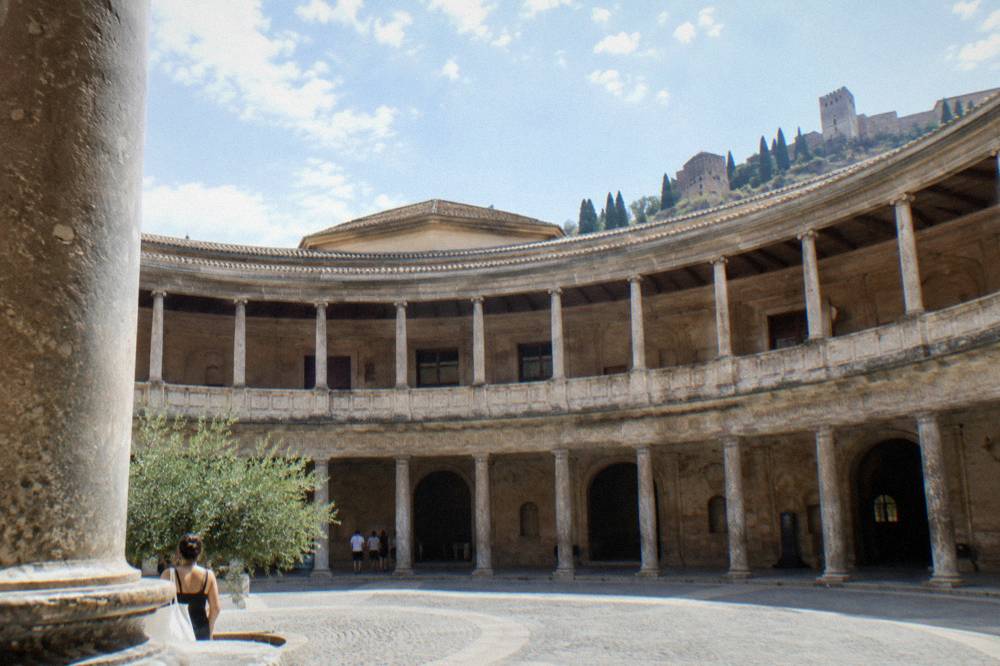
The visit to the Palace of Charles V, the Alhambra Museum and the Mosque Baths (Baño de la Mezquita) is free per the Patronato.
Free walk from here: Top Tour UNESCO AlbaicínCampo del Príncipe and Realejo
The public square and Realejo streets are free to walk, no ticket.
Free walk from here: Top Tour UNESCO AlbaicínCamino del Sacromonte and Barranco de los Negros
The open air paths and lanes of Sacromonte are free, no ticket.
Free walk from here: Top Tour UNESCO AlbaicínMirador de San Cristóbal
The open air viewpoint at the top of the Albaicín is free, no ticket.
Free walk from here: Fall in Love Walk, EnglishPlaza Bib-Rambla
The public square beside the Cathedral is free to visit, no ticket.
Free walk from here: Top Tour City and Lower AlbayzínBosque de la Alhambra and Cuesta de los Chinos
The wooded slopes and public paths around the hill are free to walk without a ticket.
Free walk from here: Top Tour UNESCO AlbaicínRealejo Street Art (El Niño de las Pinturas)
Outdoor street art around the Realejo is free, no ticket.
Free walk from here: Graná Highlights, BilingualPlaceta de Carvajales
The small public square and viewpoint is free, no ticket.
Free walk from here: Top Tour UNESCO AlbaicínAlcaiceria
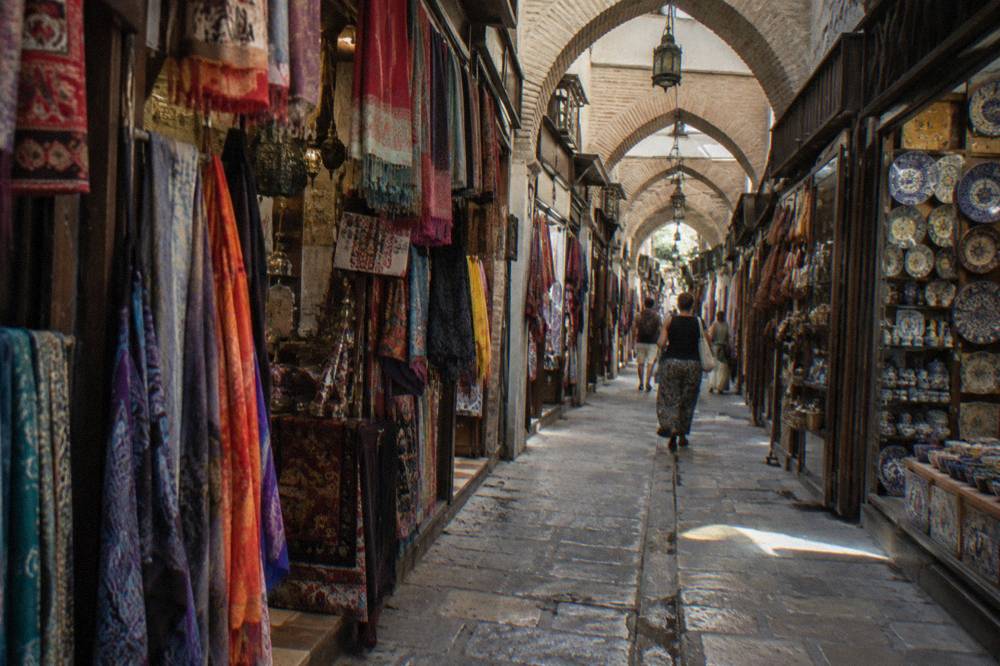
The pedestrian lanes of the old silk market are free to walk through, the shops are commercial.
Free walk from here: Darkest Mysteries, BilingualCarmen de los Martires gardens
This public garden and cultural venue is free to enter, run by the Ayuntamiento.
Free walk from here: Top Tour UNESCO AlbaicínParque Federico García Lorca
The public park is free, no ticket.
Free walk from here: Secrets of the Centre, 2h45Paseo de los Tristes
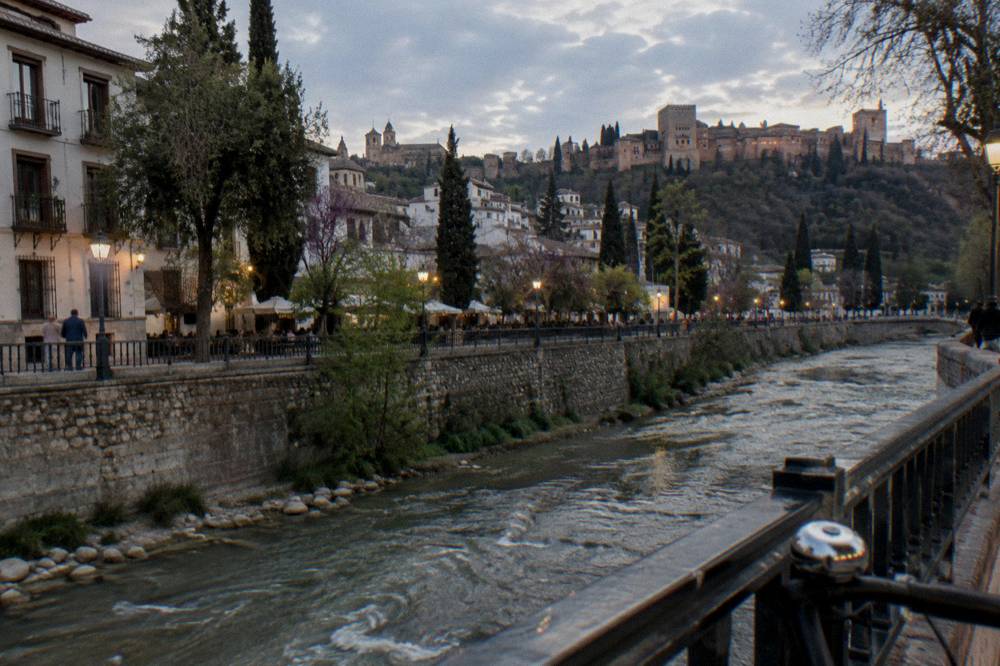
The public riverside promenade below the Alhambra walls is free, no ticket.
Free walk from here: Top Tour UNESCO AlbaicínCalle Navas and the tapas streets
Walking the street is free. In many bars a tapa comes with a drink you pay for, a custom rather than a rule.
Free walk from here: Secrets of the Centre, 2h45Carrera del Darro
The public street along the Darro river is free, no ticket.
Free walk from here: Top Tour UNESCO Albaicín1 museum or gallery you can walk into for free, each on its operator's own rule.
Full free museums guideNo residency test, no age gate, no time window.

9.3/10 · 409 freetour.com reviews · 2 hours 30 minutes · English and Spanish
Reserve free on freetour.com, free, pay what you want
15 places people ask about, answered the way each operator answers it.
| Place | Verdict | The condition | Free walks within 1 km |
|---|---|---|---|
| Parque de las Ciencias | Paid | Children under 3 free | 0 |
| Iglesia de San Nicolás (church by the viewpoint) | Paid | The mirador in front is free | 24 |
| Granada Card (city pass) | Paid | Paid city pass | |
| El Bañuelo (Arab Baths) | Condition | Entry is free on Sundays (per the official hours page) | 25 |
| Palacio de Dar al-Horra | Condition | Entry is free on Sundays (per the official hours page) | 24 |
| Casa Morisca de la Calle Horno de Oro | Condition | Entry is free on Sundays (per the official hours page) | 22 |
| Museo de Bellas Artes de Granada (Palacio de Carlos V) | Condition | Junta de Andalucía museum rule: accredited EU citizens free | 22 |
| Granada Cathedral | Condition | Archdiocese ticket office rules (ticketsgranadacristiana.com) | 25 |
| Royal Chapel (Capilla Real) | Condition | Archdiocese ticket office rules (ticketsgranadacristiana.com) | 25 |
| Monasterio de San Jerónimo | Condition | Children up to 12 free with adults | 23 |
| Monasterio de la Cartuja | Condition | Children up to 12 free with adults | 0 |
| Torres Bermejas | Condition | Free visit on Saturdays and Sundays only | 25 |
| Silla del Moro | Condition | Weekends only | 8 |
| Alhambra Free Day, 16 November | Condition | 16 November only, by reserved invitation | |
| Andalusi Monuments Free Sundays | Condition | Sundays only; paid Monday to Saturday |
Walk counts are the free walks' meeting points within 1 km of each place, measured from their coordinates.
The Alhambra hill is best early, before the tour groups thicken the paths. The free-access side, Palacio de Carlos V, Museo de la Alhambra and Baño de la Mezquita, opens at 08:30 in winter season, and the museum runs Wednesday to Saturday. On a Saturday or Sunday add the Torres Bermejas or the Silla del Moro, which open for free visits only on weekends. If Sunday is your morning, the four Andalusi monuments, El Bañuelo, Casa Horno de Oro, Dar al-Horra and the Corral del Carbón, are all free that day.
When the sun is high, the Centro works: the squares (Plaza Nueva, Plaza Bib-Rambla, Plaza de Santa Ana) connect in a flat twenty-minute loop, the Alcaicería lanes sit right beside the Cathedral, and the lanes are narrow enough for shade. Casa de los Tiros, free for accredited EU citizens, is the indoor option here. A centre walking tour, most of which start late morning, turns the same streets into a two-and-a-half-hour history lesson you pay for at the end.
This is the one plan almost every visitor follows, and it earns its popularity. Mirador de San Nicolás fills up before the light turns, so arrive early or trade down to Mirador de San Cristóbal or the Placeta de Carvajales for the same hill with fewer people. Walk up through the Carrera del Darro and Paseo de los Tristes, or take an Albaicín minibus if the climb does not appeal. Several evening walks end here with the viewpoint built into the route.
Split it by operator. The Patronato's Andalusi monuments cover the Islamic era and are free on Sundays. The Junta museums, the Archaeological on the Carrera del Darro, Bellas Artes in the Palacio de Carlos V and Casa de los Tiros, cover everything from Roman finds to Renaissance painting and are free for EU citizens. The Archdiocese runs the Cathedral, Royal Chapel, San Jerónimo, Cartuja and Sacromonte abbey, with free Wednesday-afternoon tickets through the diocesan site. Three different operators, three different rules: do not assume one free day covers them all.
San Cristóbal, Carvajales, San Nicolás and the Sacromonte lanes give you the Alhambra from every angle without a single ticket. Add the Silla del Moro on a weekend for the view down the Darro valley from the opposite direction. One Spanish-language free tour does nothing but the Albaicín viewpoints.
Honest version: nothing in Granada is free except the custom. In many bars a small tapa arrives with each drink you pay for, strongest on Calle Navas, Calle Elvira and around Campo del Príncipe in the Realejo. The tapa is a custom, not a rule: it varies by bar and does not come with water. Build a route that walks one neighbourhood, stops for a drink, walks on.
The Realejo is the open-air gallery: the murals of El Niño de las Pinturas are spread across its walls and cost nothing to find. Indoors, Bellas Artes holds the painting collection inside the Palacio de Carlos V, and the Museo de la Alhambra holds the Alhambra's own objects, free on the hill's free-access side. The Parque de las Ciencias, if science is your art, is paid at EUR 10.
The Paseo de los Tristes and the Carrera del Darro are flat, riverside and full of things to point at. Parque Federico García Lorca has space to run. Children under 12 enter the Cathedral, the Royal Chapel and the Archdiocese monuments free with adults, and under 12s are free at the Alhambra with a ticket. The Genil river promenade makes an easy stroller route.
The museums are the answer. The Museo de la Alhambra, the Archaeological, Bellas Artes and Casa de los Tiros are all indoors and all free or nearly free, though the Junta museums close Mondays. The Corral del Carbón, a covered medieval courtyard, works in light rain. The paid fallbacks are the Cathedral (EUR 10 until 28 November 2026, then EUR 7) and Parque de las Ciencias, which closes Mondays too. Note that free Wednesday-afternoon diocesan tickets give you a dry indoor option in the middle of the week.
The question every visitor asks, and the answer is more interesting than yes or no. The Alhambra hill splits into two regimes: a paid monumental enclosure and a set of free parts around it. The Nasrid Palaces, the Alcazaba and the Generalife are the paid monument, with timed entry and a ticket you normally buy online in advance. Everything listed below costs nothing.
So a full free day on and around the hill looks like this: walk up the Cuesta de Gomerez through the woods, come into the Palacio de Carlos V, spend an hour in the Museo de la Alhambra, see the Baño de la Mezquita, then cross to the Cuesta de los Chinos on the Darro side and descend into the Albaicín. On a Saturday or Sunday, add Silla del Moro for a view over the palace roofs from above. You will not set foot in the Nasrid Palaces, but you will have stood inside the Alhambra complex without paying a cent.
The Nasrid Palaces, the Alcazaba and the Generalife are the paid monument. Entry to the Nasrid Palaces is a timed slot printed on your ticket, and the official price should be checked on the Patronato's own page rather than any reseller site: the live official page and the published Junta order do not agree, so treat any single figure you see quoted elsewhere with suspicion. There are sites titled "official" that are neither official nor the Patronato's; buy only on the Patronato's own ticketing domain.
One caution on the Alcazaba specifically. Two earthquakes in August 2026 cracked battlements on its towers, and emergency repair works were approved in November for a nine-month run. The Patronato's hours page does not state its current opening state, so do not plan an Alcazaba visit, paid or otherwise, without checking first.
Children under 12 get into the paid Alhambra free, but they still need a ticket. It is a zero-cost ticket with their name on it, not an absence of a ticket, so add them to your booking like any other visitor.
Every 16 November, for the Día Internacional del Patrimonio Mundial, the Patronato opens the Alhambra General visit and the Gardens, Generalife and Alcazaba visit free. The rule comes from a Junta order of July 2025 and carries no age or residence condition: free for everyone.
But it is not a walk-in day. The free entry works by invitation, reserved in advance on the Patronato's official ticketing site, and invitations are limited. In 2026 reservations opened on 9 November for the day itself on Monday 16 November. If you are in Granada anywhere near that date, reserve as early as you can and do not count on getting in if you leave it late. The Nasrid Palaces time slot still applies even on the free day.
One more thing on the same date: the Andalusi monuments run by the Patronato, such as El Bañuelo, are also free on 16 November, and for those no invitation is needed. And a date to be careful with: 18 April appears on the Patronato's calendar as a special-access date, but no terms have been published for it, so do not build a plan around it being free.
You may read that Granada residents get free or discounted Alhambra entry on Sundays. That scheme exists, but its terms are not fully published, and it is aimed at locals. Do not assume a tourist qualifies, because nothing official says so.
If you want the monument explained rather than just walked past, there is a free pay-what-you-want tour on GuruWalk, "Free tour of the free areas of the Alhambra", meeting at the Puerta de la Justicia. Two hours, in Spanish, and it covers exactly the parts listed above: the hill you can see for nothing.
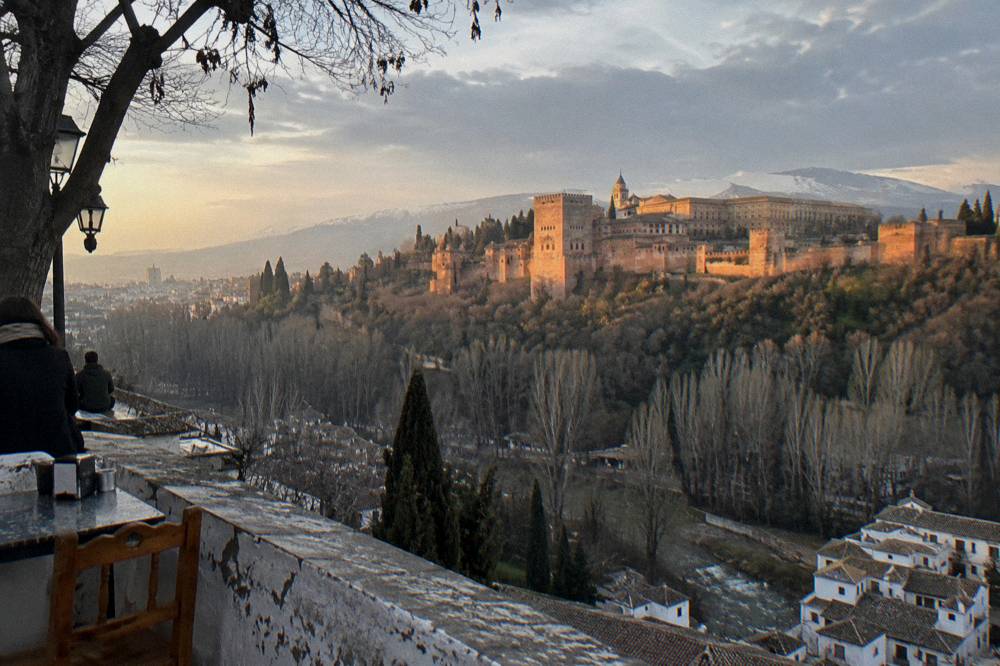
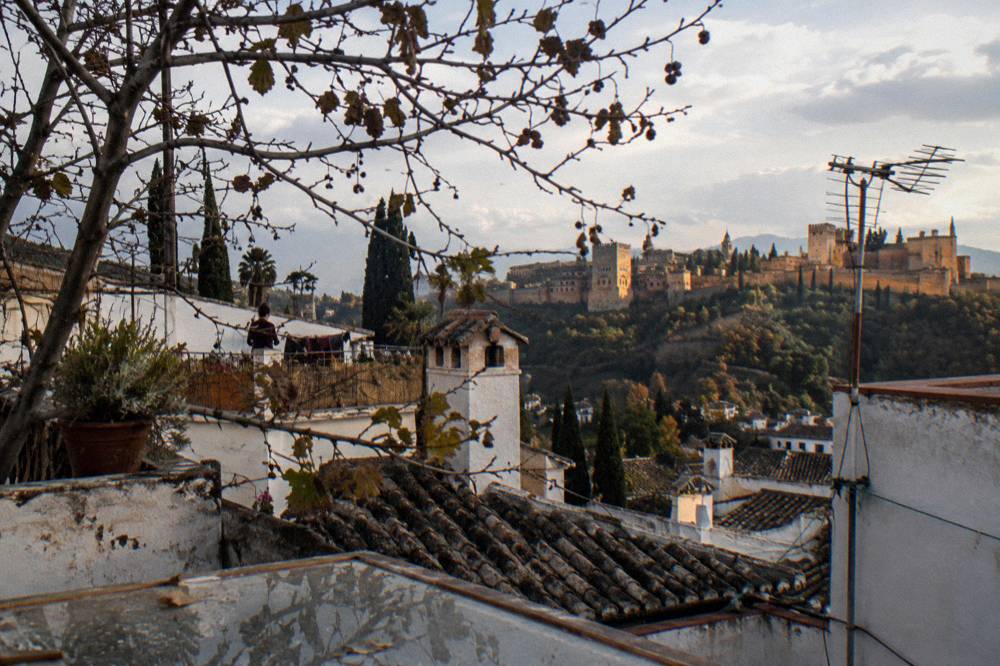
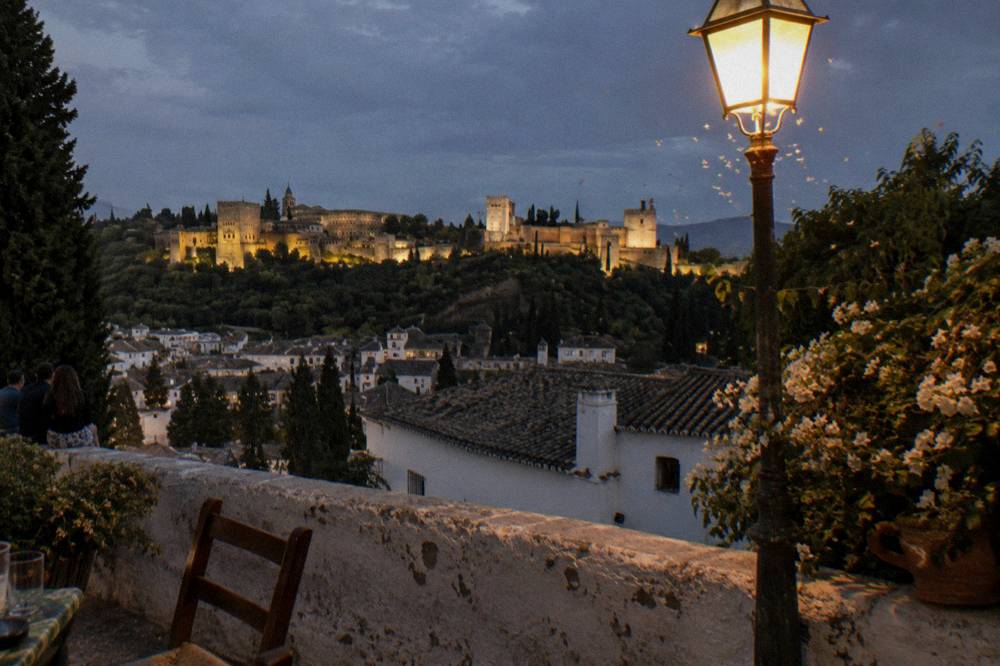
Sunset from the Mirador de San Nicolás is the one view everyone comes to Granada for, and it costs nothing. The viewpoint is an open square in the Albaicín, no ticket, no gate, no booking, and it faces the Alhambra and the Sierra Nevada straight on. At golden hour it fills with people, guitar players among them, and you are standing on a church square in a living neighbourhood, so the crowd is part of it rather than a problem to avoid. The Albaicín minibuses serve the area and car access up there is restricted, which is one more reason to arrive on foot through the lanes.
If San Nicolás feels too busy, the same hill holds alternatives a few minutes' walk apart, and a route linking them makes a good free evening.
A natural loop: up through the Albaicín to San Cristóbal, down past the Placeta de Carvajales to San Nicolás for the sunset, then descend via the Callejón de las Tomasas or the lanes to the Paseo de los Tristes and walk the Carrera del Darro back toward Plaza Nueva with the Alhambra lit above you. Every step of it is public street.
One habit worth adopting up there: keep your voice down after dark. The Albaicín is residential, and the city's current responsible-tourism campaign is explicitly about noise and respect for the people who live in these lanes. Being quiet costs nothing and is what keeps these viewpoints pleasant for everyone.
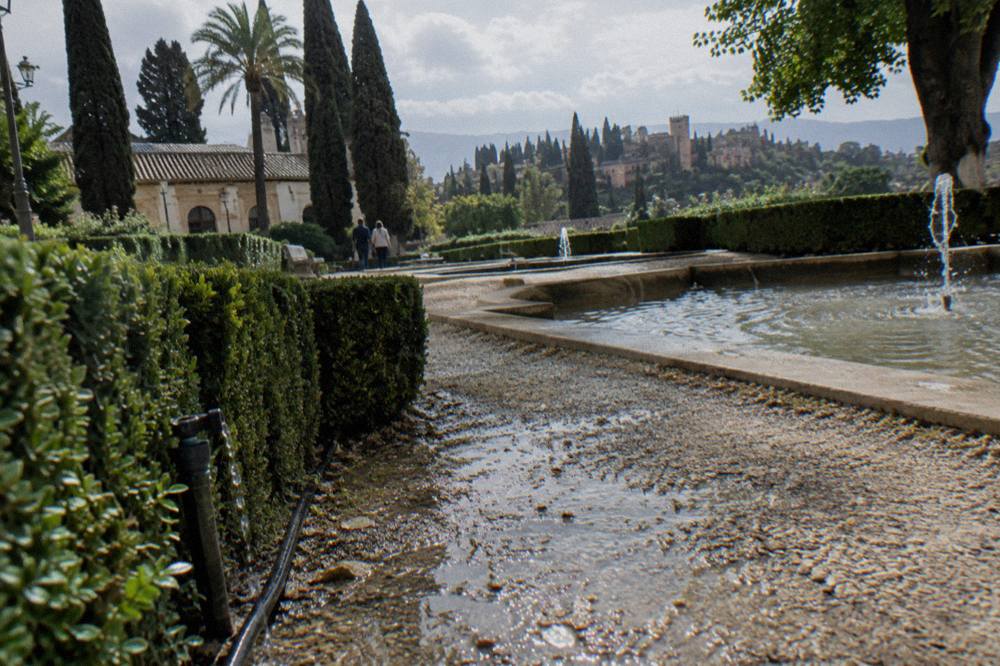
Carmen de los Mártires, just below the Alhambra on the same hill, is a public garden run by the city, free to enter, with ponds, peacocks and views over the Vega. It is a slower, greener experience than the miradores, and it pairs well with a free wander of the Alhambra woods, since both sit on the same hillside. Treat opening times as something to check on arrival rather than something to plan around, as published hours are inconsistent between sources.
South of the centre, the Realejo neighbourhood offers a different free walk. Campo del Príncipe is its main square, a plain, tree-lined space with tapas bars around the edges; the square itself is free, the drinks are not. Radiating out from it and through the barrio's lanes you find the street art associated with El Niño de las Pinturas, murals painted on shutters and walls across the neighbourhood. There is no ticket, no centre and no set route: you walk the streets and find the walls, which is the whole appeal. Locations shift as walls are repainted, so treat any mural map you find as a suggestion rather than a fixture.
Every place on this page is a street, square, path or public garden rather than a controlled monument. That means no opening hours to miss, no queue, no timed slot, and no way to be told the price just went up. It also means the experience depends on when you go: San Nicolás at sunset, San Cristóbal in the morning quiet, the Carrera del Darro in early evening, the Realejo murals whenever the light is good.
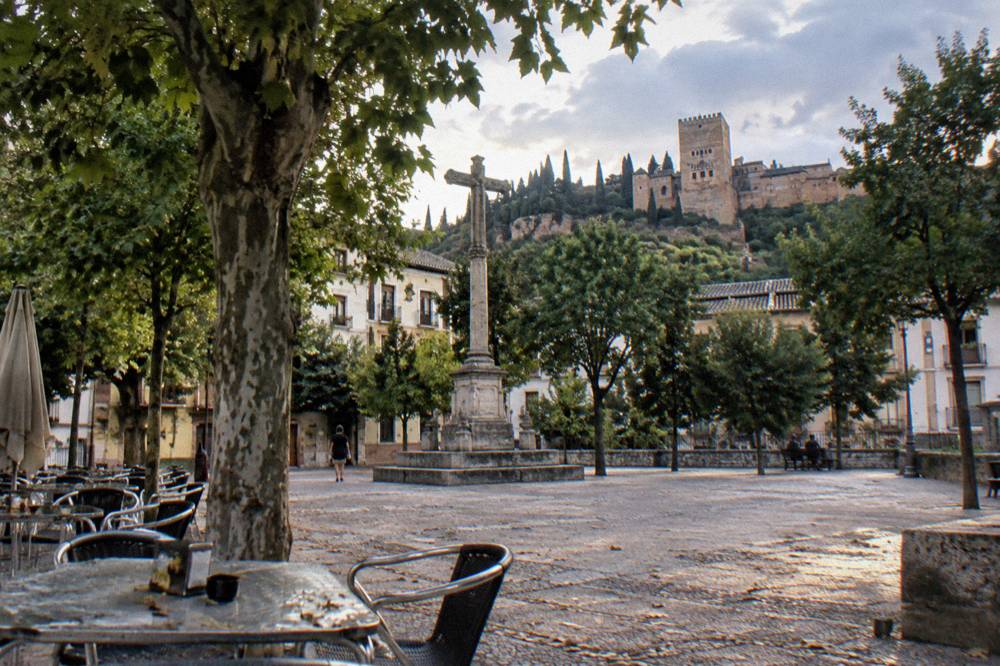
If you would rather have someone local walk you to the best angles and explain what you are looking at, free pay-what-you-want tours cover exactly this territory. On GuruWalk, "Free tour of the best viewpoints of the Albayzín" meets at Plaza Nueva and runs about two hours in Spanish; "The Alhambra from the Albaicín and Sacromonte" meets at Plaza de Santa Ana. On freetour.com, "Free Tour Albayzín y Sacromonte, UNESCO Heritage Neighborhoods" also starts at Plaza de Santa Ana. All are pay-what-you-want, so the price is whatever you decide at the end.
Order a small beer or a glass of tinto de verano in a bar in Granada and, in many places, a plate of food arrives with it without anyone asking. That is the tapa, and it is the single thing visitors most often get wrong. The tapa itself is not something you order and it is not something you pay for separately. It comes attached to the drink, which you do pay for. No drink, no tapa.
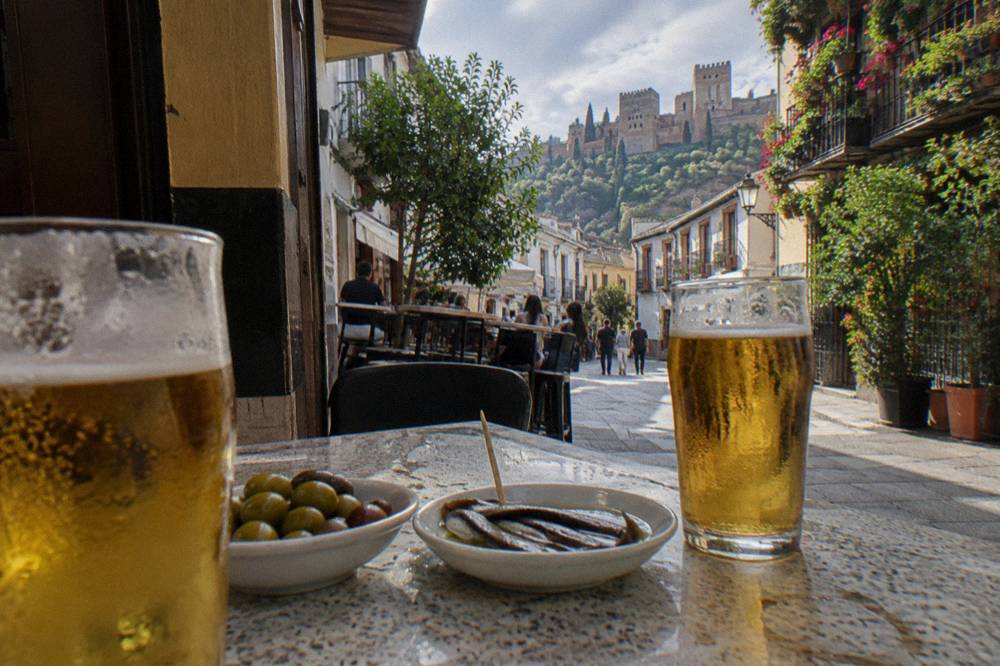
It helps to be clear about what this is and is not. Free tapas in Granada are a custom, not a law and not a guaranteed right. There is no city ordinance obliging a bar to feed you. Each bar decides for itself whether to participate, what to serve, and how generous to be. Some bars bring a choice of tapas and let you pick. Others bring whatever the kitchen is making that day, one dish per round of drinks, and the dish often changes or improves as you keep ordering. A few bars in the tourist core do not participate at all, especially along the most heavily touristed stretches near the Cathedral. If a menu lists tapas with prices next to them, those are raciones or paid tapas, a different thing from what arrives unasked with your drink.
The custom has a logic to it once you see it in action. The tapa is sized to the drink, not the reverse. A caña, the small draft beer, gets a modest plate. A larger round of drinks tends to get a larger or more careful plate. Locals move through the evening bar to bar, one drink here, one drink there, and the tapas accumulate into dinner. Trying to game the system by ordering the cheapest possible drink and expecting a banquet misses the point. Order normally, eat what arrives, and if you are still hungry, order another round or ask for a media ración, which you pay for.
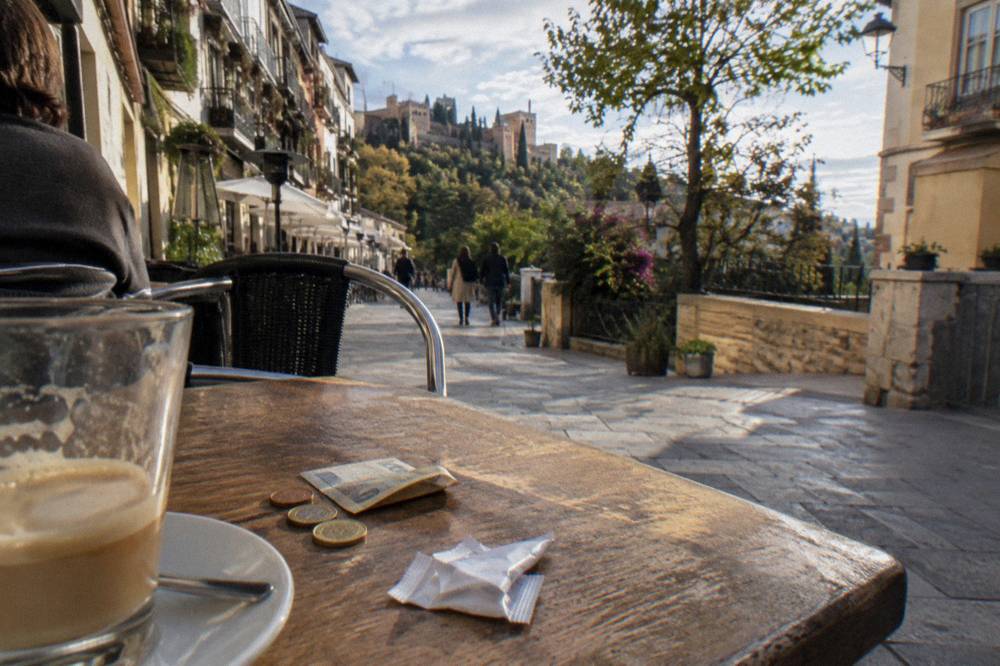
Geography matters. The custom is strongest in the streets where locals actually go out. Calle Navas, the narrow pedestrian street off Puerta Real, is the classic tapas street: wall to wall bars, tables spilling out in warm weather, and the custom firmly in force. Calle Elvira, running from Gran Vía up toward the Albaicín, works the same way. The Realejo, around Campo del Príncipe, is another pocket where the habit holds. In the most touristed lanes around Plaza Bib-Rambla and the Alhambra approaches, participation is patchier and the kitchen leans toward paid dishes. The pattern is not absolute, but as a rule of thumb the further you are from a tour group's walking route, the more reliably the tapa appears.
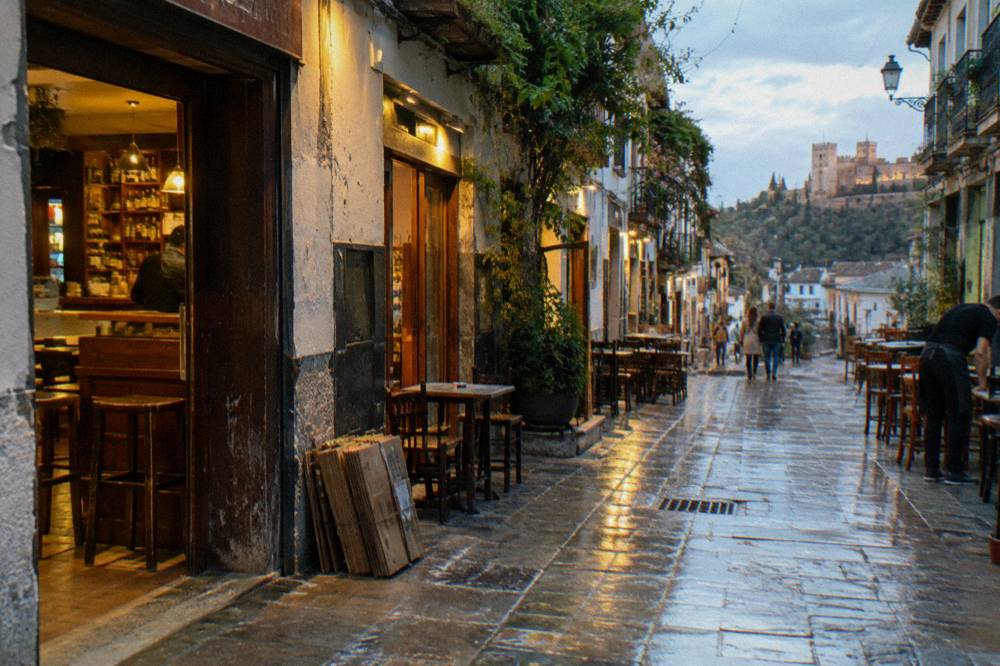
Even if you never sit down in a bar, the tapas streets themselves cost nothing to walk. Calle Navas is a public pedestrian street, busy from mid-evening onward, and simply strolling down it at peak time is one of the better free evening spectacles in the city: kitchens working, waiters running plates, groups of locals standing outside with their drinks. Calle Elvira gives you the same energy with a more student flavour. Walking costs nothing. The drinks are what you pay for, and the tapa, where the custom holds, comes with them.
A few practical points keep expectations honest. The tapa is small by design, a few bites rather than a meal, and the point is to accompany the drink, not replace dinner. It does not come with everything behind the bar: order a bottle of water or a soft drink in some places and nothing arrives, because the custom is anchored to alcoholic drinks in most bars, though many do serve a tapa with any drink as a matter of house policy. Quantity and quality shift from bar to bar, night to night, and season to season. The custom also shifts over the years, tightening or loosening with tourism and the economy, so what a friend described five years ago may not match what you find tonight.
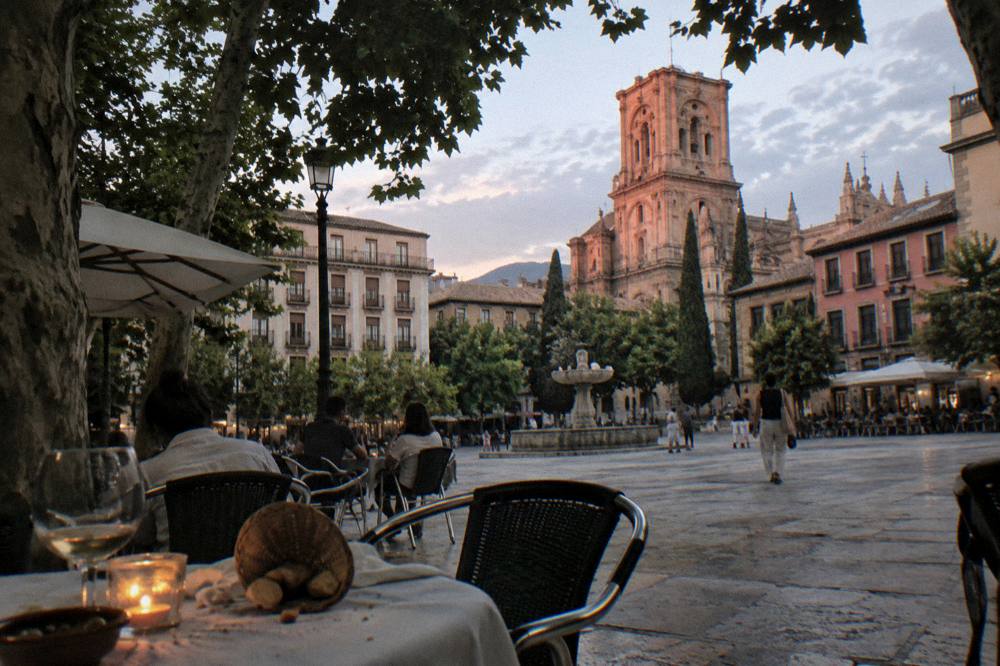
Treat the whole thing as a pleasant surprise rather than a guarantee. Ask for your drink, see what arrives, and if nothing does, that is your answer for that bar. Move on. The next bar, one street over, will probably bring you something good with your next caña, and on Calle Navas you will not have far to walk.
Granada's free walking tours start from a small set of squares and gates, and knowing which one your walk uses is half the logistics of the day. The meeting points cluster in three areas: the centre around Plaza Nueva and the Cathedral, the Albaicín boundary at Puerta de Elvira and Plaza de Santa Ana, and the riverside at Paseo de los Tristes.
Plaza Nueva is the busiest single meeting point. On GuruWalk, the viewpoint walk with María meets there, as do Pablo's Complete AlbaicÃn tour and Granada a Pie's Albaicín walk, which is interesting because the tours themselves head up the hill. On freetour.com, Walk in Granada Tours runs both its AlbaicÃn and Sacromonte Free Tour and its Essential Granada Free Tour from Plaza Nueva, next to the fountain. It is a natural hub: buses stop nearby, it sits at the foot of both the Alhambra and the Albaicín, and it is flat, open and hard to misidentify.
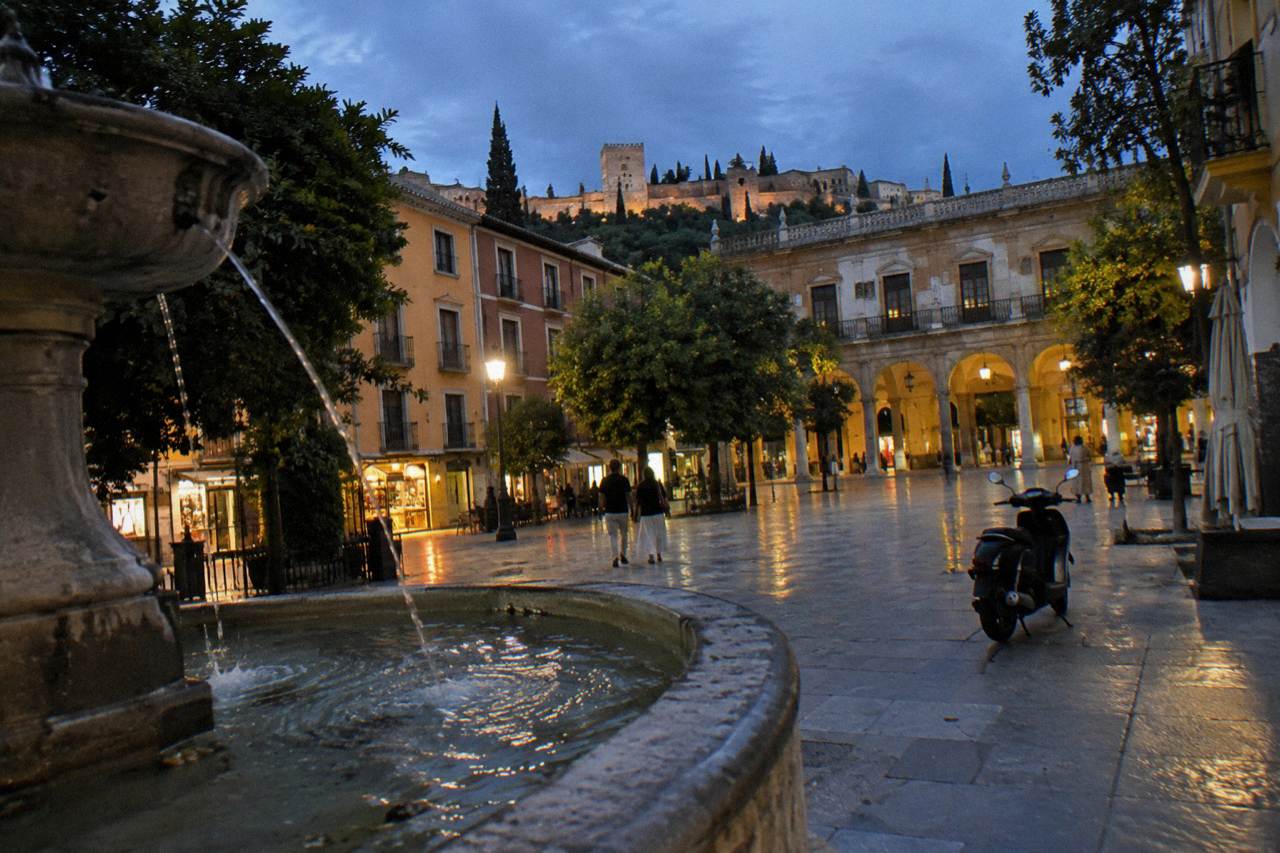
Puerta de Elvira is the other gateway point. Three walks meet at or near it on GuruWalk: Daniel's Albaicín and Sacromonte free tour, Miguelón's Free Tour Albayzin, Flamenco and Sacromonte, and Marta's Free Tour Fall in Love with Granada, which is listed as meeting at Puerta de Elvira, Plaza del Triunfo, the two being a few minutes apart. The old gate is a fixed landmark, which is exactly what you want from a meeting point: one arch, no ambiguity.
Plaza de Santa Ana, where the Darro walk begins, is the most-used Albaicín-side point. Cris, Granada a Pie, Sonia, Sandra and Carlos all run GuruWalk tours that meet there, and My Top Tour's Free Tour Albayzín y Sacromonte on freetour.com uses it too. One tour meets further along the river: Granada Magic Tours' Free Tour Emblematic Neighborhoods meets at Paseo del Padre Manjón, on Paseo de los Tristes, the promenade below the Alhambra walls. If your confirmation says Paseo de los Tristes, walk past Plaza de Santa Ana along the river and look for the guide.
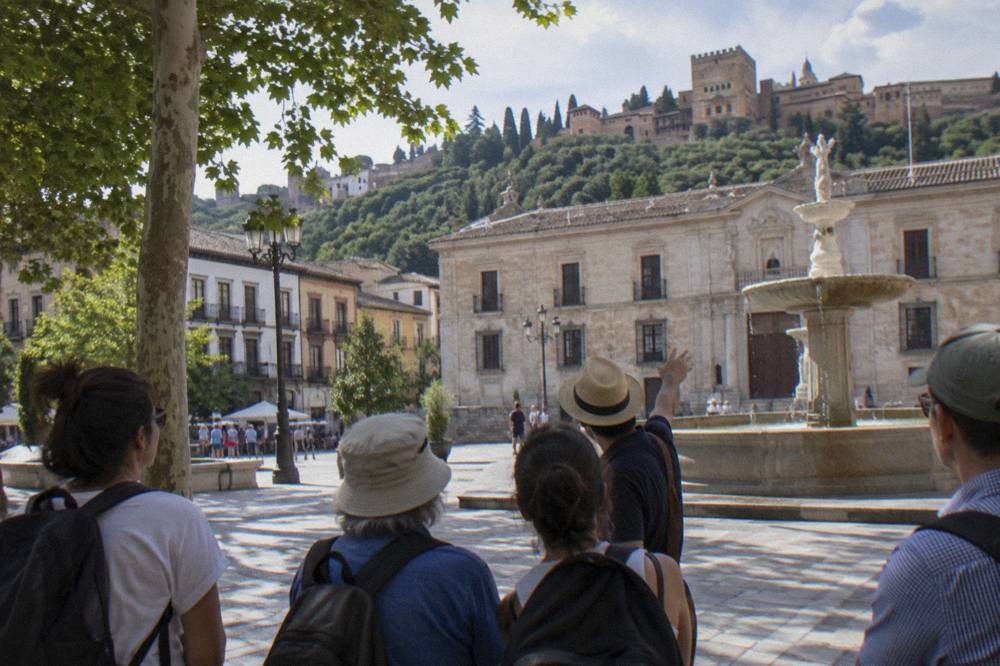
In the centre, the points fan out. Gerson's Secrets of Granada meets on Calle Mesones, at the El Suizo building. Free Group Guides' essential tour meets at Plaza Isabel la Católica, as does Irene's Realejo walk on GuruWalk and Granada Adentro's Albayzin-Sacromonte tour on freetour.com. Marta's combined historic centre tour meets at the Sagrario church next to the Cathedral, and Alexandra's legends tour meets at the Cathedral itself, on Plaza de las Pasiegas. My Top Tour's two freetour.com walks meet on Plaza de Bib-Rambla, one at the operator's own kiosk, and Al-Andalus Tours' city centre tour meets on the same square. Granada Freetour's walk meets near Corral del Carbón on Calle Mariana Pineda. Pablo's free-areas-of-the-Alhambra tour is the outlier: it meets at Puerta de la Justicia, up on the Alhambra hill itself, so allow the walk up Cuesta de Gomerez or a bus ride to get there.
Why does the meeting point matter this much? Because these are free tours with no upfront payment, the guide has no financial hold on you and you have no ticket barrier holding you to a specific entrance. The group simply forms at a spot. If you are at the wrong fountain, the wrong gate or the wrong square, there is nothing to scan and nobody to notice your absence. Granada's old centre is compact but the squares look alike at dusk, and Plaza Nueva, Plaza Bib-Rambla and Plaza de las Pasiegas are all within a ten-minute walk of each other, which is close enough to be confusing and far enough to miss a departure.
Two habits solve this. First, check the platform page the day before your walk: the meeting point, and occasionally the guide's contact details, live on the GuruWalk or freetour.com listing, and that page is the source of truth, not this directory. Second, arrive early, ten or fifteen minutes. Guides usually hold a sign or an umbrella and gather the group before setting off, and being there before the crowd forms makes finding them trivial.
Most of these squares are free destinations in their own right, so the wait costs nothing. Turn up early, sit with a drink on Plaza de Santa Ana or stand under the Puerta de Elvira arch, and the pre-tour wait becomes part of the walk.
A Granada free walking tour runs on a simple exchange: you book without paying, the guide walks you around for two to three hours, and at the end you tip what you think the walk was worth. Both platforms this site lists tours from, GuruWalk and freetour.com, work this way. There is no price, no minimum, and no way to pay in advance even if you wanted to.
Booking happens on the platform. You pick a tour on GuruWalk or freetour.com, choose a date and time slot, and reserve a place, usually with a name and contact details. The confirmation tells you the meeting point and the guide's name. That listing page is also where the practical details live, the language of the walk, the duration and any note about stairs or hills, so read it before you go rather than relying on a directory summary like this one.
Reviews are the platform's quality mechanism, and they are worth reading before you choose. The Granada listings range from walks with thousands of reviews to walks with a handful, and the ratings differ accordingly. A tour with hundreds or thousands of reviews and a high score tells you the operation is consistent; a five-star rating from seven reviews tells you almost nothing yet. Neither number tells you what you personally will enjoy, but the pattern across many walkers is the most reliable public signal a free tour has, given that there is no price to signal quality.
Durations in the current listings run from two hours to two hours 45 minutes. The shorter walks, two hours flat, cover the legends tour, the viewpoints walk, the free-areas-of-the-Alhambra tour, the Realejo walk, and several Albaicín tours. The longer ones, two hours 30 to 45 minutes, are the combined Albaicín and Sacromonte routes and the full historic-centre tours, which makes sense: those neighbourhoods sit on a hillside, and climbing from the Darro up through the Albaicín to the miradores eats time. Plan the rest of your day around the stated duration plus a margin, because a good group with lots of questions runs long.
Languages are stated per tour, not per operator. Most Granada free tours run in Spanish or English; several run in both, sometimes as separate listings: Walk in Granada Tours, My Top Tour, Miguelón's and Marta's combined tour among them. If your Spanish is weak, filter the platform listings for English before you book rather than assuming the guide will switch.
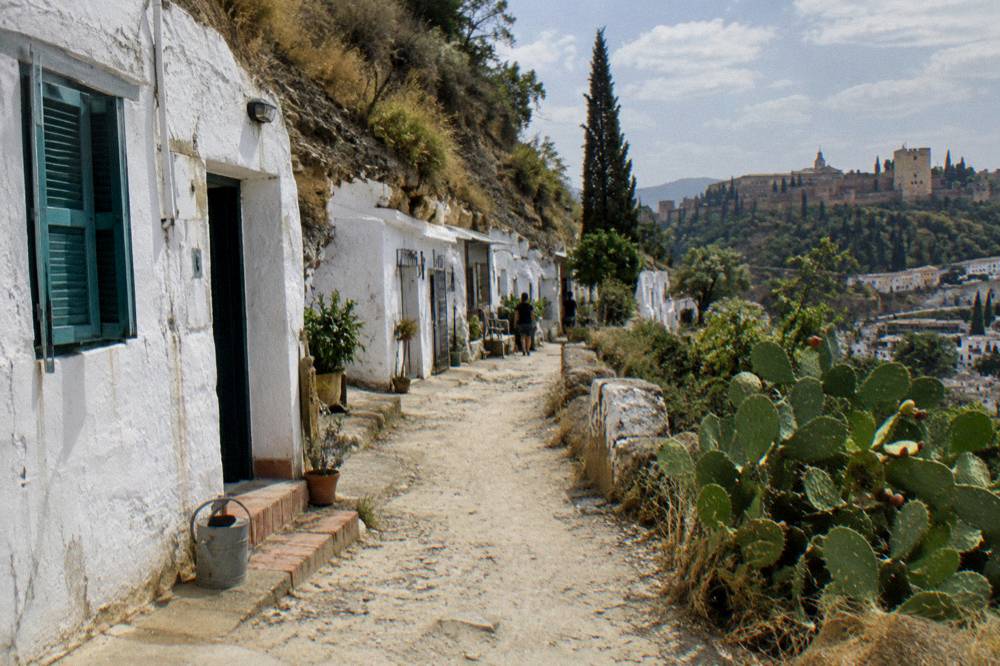
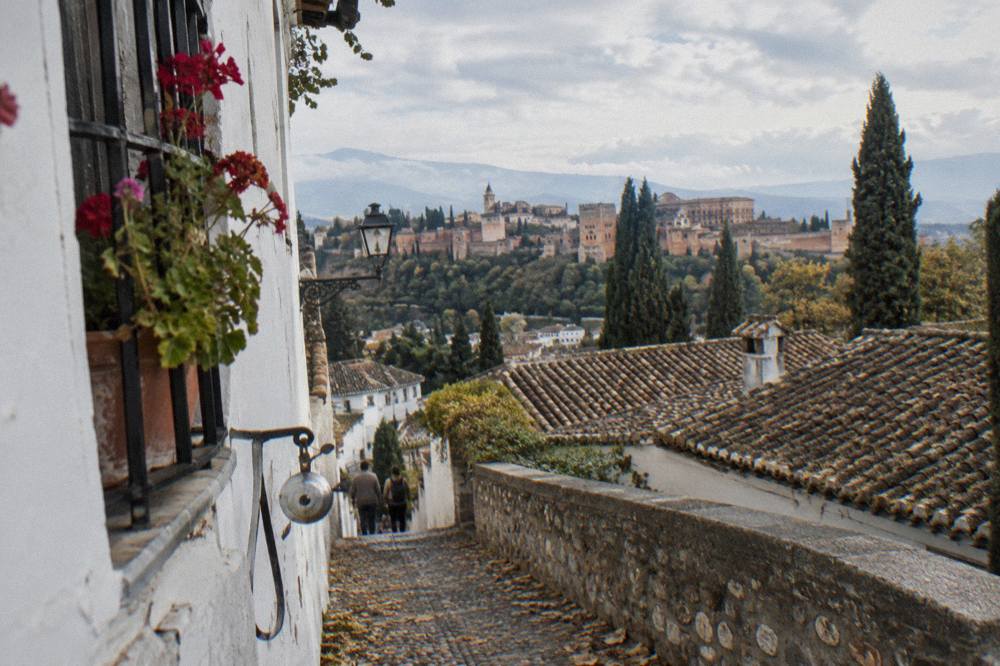
What to bring is dictated by the terrain rather than the tour. The Albaicín and Sacromonte walks involve cobbled lanes, stepped alleys and sustained uphill sections, so flat shoes with grip beat anything fashionable. Bring water, sun protection for daytime walks, and a layer for the evening, since several tours run at night, including the legends and mysteries walks. The Alhambra free-areas tour involves the hill's paths and the Puerta de la Justicia entrance area. Nothing needs printing: the booking is digital, and the guide keeps a list.
At the end, the guide will explain the tipping model, usually briefly and without pressure, and the group tips individually. Cash is the dependable option. How much is entirely your call; the platforms leave it open, and that openness is the point of the format. If the walk was good, tip accordingly, because the tip is the guide's entire income from the tour.
One Granada-specific note of conduct. The city's Albaicín, Sacromonte and Realejo neighbourhoods are residential, and the Ayuntamiento is running an Enjoy and Respect campaign there in November and December 2026, with leaflets, street panels and bus ads asking visitors to keep noise down and respect the people who live there. Free walking tours gather in these lanes in the evenings, and a group of twenty talking at full volume under someone's window at 22:00 is exactly what the campaign addresses. Keep your voice down as the group moves through the Albaicín at night. It costs nothing, and it keeps the format welcome in the very neighbourhoods these tours depend on.
Granada's calendar shapes which free things make sense, not through weather but through opening hours, feast days and street events. Here is how the year breaks down for a visitor spending little or nothing.
Winter, from mid-October to the end of March, is the season of shorter hours on the Alhambra hill. Day visits run 08:30 to 18:00, with the ticket office from 08:00, and night visits to the Nasrid Palaces run Friday and Saturday evenings. The Museo de la Alhambra shifts to its winter timetable too, Wednesday to Saturday into the early evening, Sunday and Tuesday mornings only, Monday closed. The free Sunday rule for the Andalusi monuments, El Bañuelo, Dar al-Horra, Casa Horno de Oro and Corral del Carbón, applies year round, but the winter closing dates matter: the Junta museums shut on 1 and 6 January and 24, 25 and 31 December, while staying open on the December festive days and on 2 January.
The single biggest date on the free calendar is 16 November, the Dia Internacional del Patrimonio Mundial. Every 16 November the Patronato opens the Alhambra free by invitation, covering the general visit with the Nasrid Palaces, Alcazaba and Generalife, and the gardens visit, with reservations made in advance on the official ticketing site. Invitations are limited and they go fast, so if you are in the city for that date, reserve early and do not count on walk-up entry. The Andalusi monuments that are open are free that same day without an invitation, which makes 16 November the best value date of the year even if you miss the Alhambra lottery. The Alhambra closes entirely on 25 December and 1 January.
December belongs to Christmas. The pattern, roughly, is lights switching on in the city in late November, nativity stallholders setting up on Plaza Bib-Rambla in mid-November and staying through to 6 January, and the Cabalgata de Reyes, the Three Kings parade, filling the streets on the evening of 5 January, free to watch from anywhere along the route. Treat these as patterns rather than fixed dates: the exact switch-on day and stall dates shift a little each year. The Bib-Rambla stalls are the free event that rewards repeat visits, since the nativity scenes on display change daily through the season. The Hill's Silla del Moro and Torres Bermejas keep their weekend-only free access through winter, with the shorter cold-season hours.
Semana Santa is the other great street season. In 2027, Palm Sunday falls on 21 March and Easter Sunday on 28 March, so Holy Week runs through late March. Processions move through the centre, the Realejo and along routes visible from public streets, and watching them costs nothing. It is also the most crowded week of the year, and free walking tours, which depend on walkable lanes and audible guides, feel that pressure. Book the platform listing early for that week if you want a place.
Spring and the long stretch to autumn bring the summer timetable back: from 1 April the Alhambra's day visits extend, the Andalusi monuments split their day with an evening reopening, and the hill's free weekend sites run to later hours. Carmen de los Mártires and the public gardens are at their best in this window, and the free hill walks, Bosque de la Alhambra, Cuesta de los Chinos, the free parts around Palacio de Carlos V, fit comfortably into longer days. 18 April appears on the Patronato's calendar as a special-access date, but no free terms are published for it, so plan nothing around it.
A closing note on Sunday planning. Because the Andalusi free-Sunday rule is the Patronato's and covers only those four monuments, a Sunday in Granada combines well with the always-free streets: Carrera del Darro, the miradores, Paseo de los Tristes, all open, all unticketed, in every season. Whatever the calendar says, those stay free.
Eleven days into November and the picture is already clear: the big free event of the season is the Alhambra's invitation-only day on Monday 16 November, the Sunday free-entry rule at the Andalusi monuments carries on as usual, and the free parts of the Alhambra hill stay free. Here is where the free walking tours stand, with the exact figures from the current listings on GuruWalk and freetour.com.
| Walk | Platform | Rating | Reviews | Meeting Point |
|---|---|---|---|---|
| The most essential Free Tour of Granada! | GuruWalk | 4.91 | 5112 | Plaza Isabel la Católica |
| Essential Granada Free Tour | freetour.com | 9.4 | 5237 | Plaza Nueva, next to the fountain |
| AlbaicÃn and Sacromonte Free Tour | freetour.com | 9.5 | 4598 | Plaza Nueva, next to the fountain |
| Free Tour Granada: City Center & Albayzín | freetour.com | 8.5 | 2736 | Plaza de Bib-Rambla, My Top Tour kiosk |
| Granada in full Historic center, Albaicín and Sacromonte Free Tour | GuruWalk | 4.94 | 710 | Sagrario Church, next to the Cathedral |
| Free Tour Albayzin, Flamenco & Sacromonte: Granada's living soul | GuruWalk | 4.95 | 668 | Puerta de Elvira |
| Free Tour Fall in Love with Granada | GuruWalk | 4.92 | 573 | Puerta de Elvira, Plaza del Triunfo |
| Albaicín and Sacromonte free tour | GuruWalk | 4.94 | 936 | Puerta de Elvira |
Where the free days stand right now:
Yes, once a year. On 16 November, the Día Internacional del Patrimonio Mundial, the Patronato opens the Alhambra General and the Gardens/Generalife/Alcazaba visits free by invitation. You reserve on tickets.alhambra-patronato.es, reservations for 2026 opened on 9 November, and invitations go fast. The rest of the year the Nasrid Palaces, Alcazaba and Generalife are paid, with children under 12 free with a ticket. The free parts of the hill, listed elsewhere on this page, are separate and always free.
More than most people expect. The Palacio de Carlos V, the Museo de la Alhambra and the Baño de la Mezquita are free per the Patronato, and the palace sits on the free-access side of the hill, so you do not need a Nasrid Palaces ticket to enter. The wooded slopes, the Cuesta de Gomerez and the Cuesta de los Chinos are public walking routes. Torres Bermejas and the Silla del Moro are free on weekends only. What stays paid is the monumental enclosure: Nasrid Palaces, Alcazaba and Generalife.
Two M4.8 earthquakes on 15 and 18 August 2026 cracked battlements on the Torre del Homenaje and the Torre Quebrada. Emergency works were approved on 4 November 2026, budgeted at EUR 702,738.64 over nine months. Access to the base of the towers was restricted and an alternative itinerary was allowed days after the quakes. The Patronato hours page does not state the current opening situation, so check the official page before planning a visit around it.
Four Andalusi monuments run by the Patronato: El Bañuelo, the Palacio de Dar al-Horra, the Casa Horno de Oro and the Corral del Carbón. The rule is the Patronato's own, no residency or EU condition is stated, and it covers only these four. It does not extend to the Alhambra, the Cathedral or the Junta museums. Monday to Saturday the four sit on the shared Andalusi Monuments ticket at EUR 8.48 for all of them together.
Not for most visitors. Children up to 12 enter free with adults, and people born in or resident in Granada province get in free all day Tuesday with ID. Every Wednesday afternoon the Archdiocese releases a free ticket through its own site. Everyone else pays: EUR 10 individual and EUR 8 reduced until 28 November 2026 while the Kerygma exhibition is on, then EUR 7 and EUR 5 from 29 November. There is no free entry for worship-only access stated anywhere we found.
The Archdiocese of Granada offers a free ticket every Wednesday afternoon at its monuments, which include the Cathedral, the Royal Chapel, San Jerónimo, the Cartuja and the Abadía del Sacromonte. You reserve it through the diocesan site. It is separate from the Tuesday resident scheme, which covers only the Cathedral and the Royal Chapel. Booking details sit on the diocesan booking page, so read the conditions there before turning up.
The Junta de Andalucía museums are: the Museo Arqueológico y Etnológico, the Museo de Bellas Artes in the Palacio de Carlos V, and the Casa de los Tiros. Accredited EU citizens enter free, and the same rule extends to students, over-65s, retirees, people with 33%+ disability and ICOM members. Visitors from other countries pay EUR 1.50. This is a Junta rule only: it does not apply to the Alhambra, the Cathedral or the Parque de las Ciencias.
In many bars, yes, with a condition: the tapa comes with a drink you pay for. It is a custom, not a law, so it varies by bar and does not come with water. The custom is strongest on Calle Navas, Calle Elvira and around the Realejo and Campo del Príncipe. Nobody can promise a specific bar will do it, and no official page sets a fixed portion or price. Treat it as a pleasant norm rather than a guarantee.
The Mirador de San Nicolás is the famous one: open air, no ticket, always accessible, with the classic Alhambra view at sunset. It gets crowded and you are standing on the church square, so arrive early if you want a front spot. If you want quiet, the Mirador de San Cristóbal at the top of the Albaicín sees far fewer people, and the Placeta de Carvajales is a small square with a view and almost no crowds. All three cost nothing.
Yes, and Sunday is the day to do it. El Bañuelo, on the Carrera del Darro, is one of the oldest Arab baths open to visitors in Spain, and entry is free on Sundays under the Patronato's Andalusi monuments rule. The rest of the week it sits on the EUR 8.48 Andalusi Monuments ticket, which also covers the Dar al-Horra, the Casa Horno de Oro and the Corral del Carbón. Winter hours are 10:00 to 17:00, and it closes 25 December and 1 January.
You book a place on GuruWalk or freetour.com, meet the guide at the stated point, walk, and pay what you want at the end. There is no fixed price and no obligation beyond the tip. Guides run these tours for a living, so if the walk was good, pay accordingly. Meeting points in Granada cluster around Plaza Nueva, Puerta de Elvira, Plaza de Santa Ana and Plaza Isabel la Católica, all easy to find on foot from the centre.
No tourist tax in Granada appears in any official source we could reach, so we do not state it as a firm fact either way. Prices you will actually face: the Alhambra General ticket, the EUR 8.48 Andalusi Monuments ticket on weekdays, the Cathedral at EUR 10 until 28 November 2026 and EUR 7 after, and the Parque de las Ciencias at EUR 10. The miradores, squares, riverside walks and the Alhambra hill's free parts cost nothing at all.
Quite a lot. Children under 12 enter the Alhambra free with a ticket, and the same under-12 rule applies at the Cathedral, the Royal Chapel, San Jerónimo, the Cartuja and the Abadía del Sacromonte. The Parque de las Ciencias is free for under-3s. Everything genuinely free, the miradores, the Paseo de los Tristes, the Carrera del Darro, the Bosque de la Alhambra, the Parque Federico García Lorca and the Carmen de los Mártires gardens, is free for children too.
The Patronato lists 18 April, the Día Internacional de los Monumentos y Sitios, as a special-access date, but it has published no terms. We do not call it free, because nothing official says so. If you are planning an April trip around free entry, watch the Patronato pages closer to the date. The one date with a confirmed free scheme is 16 November each year, by invitation, under the Junta order of 17 July 2025.
Yes, the walk itself costs nothing. The Cuesta de Gomerez from Plaza Nueva and the Cuesta del Realejo are the access routes the Patronato itself names, and the Cuesta de los Chinos climbs from the Darro through the Bosque de la Alhambra. You can walk up to the Puerta de la Justicia area and the free Palacio de Carlos V without any ticket. Paying starts at the timed Nasrid Palaces slot, the Alcazaba and the Generalife.